Mooky was a location-based social and dating application, designed to help its users to find the perfect match by providing a large scale of filters. Mooky was free of charge. The app made use of mobile devices' geolocation, a feature of smart phones and other devices which allows users to locate other users who are nearby. == History == Mooky was published on Google Play on April 17, 2016, by Mooky BV. The latest version of this application was version 1.0.6. == Overview == === How it works === Mooky used Facebook to build a user profile with photos and basic information, like the user's surname and age. From there on the user had to fill in their Mooky profile, which contains information about the user's height, posture, hair color, eye color, ethnicity and religion. After this the user could select its preferences to find matches nearby. === User verification === Mooky asked their users to take a selfie holding a piece of paper saying 'Mooky'. Mooky would then manually accept or decline the user verification.
Neurorobotics
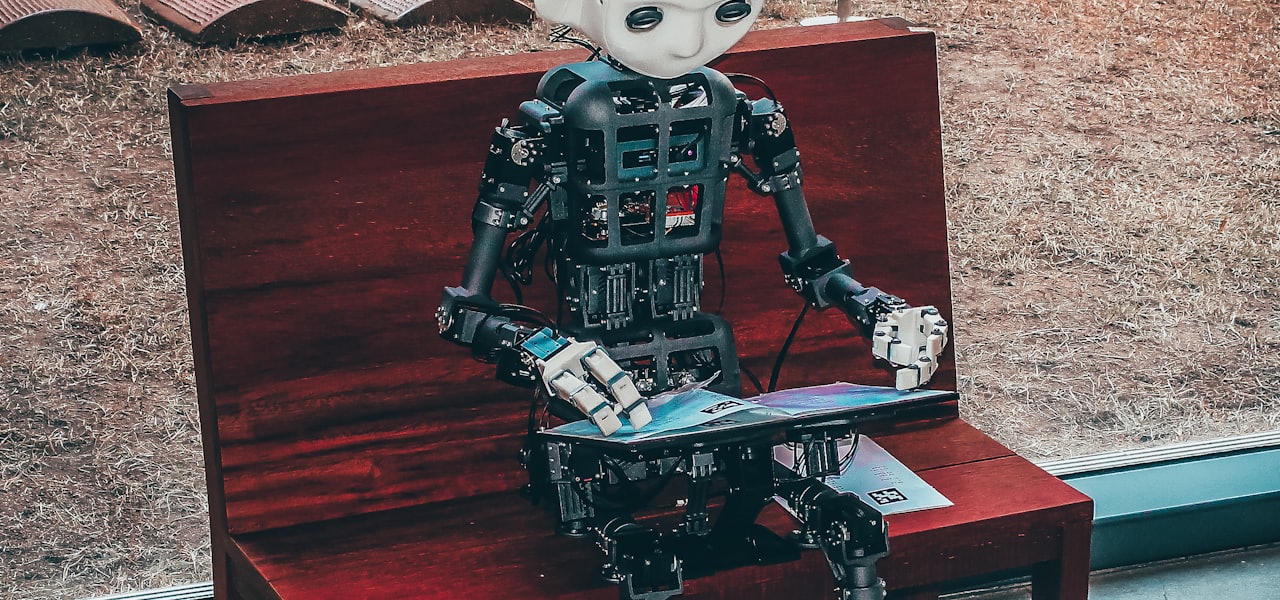
Neurorobotics is the combined study of neuroscience, robotics, and artificial intelligence. It is the science and technology of embodied autonomous neural systems. Neural systems include brain-inspired algorithms (e.g. connectionist networks), computational models of biological neural networks (e.g. artificial spiking neural networks, large-scale simulations of neural microcircuits) and actual biological systems (e.g. in vivo and in vitro neural nets). Such neural systems can be embodied in machines with mechanic or any other forms of physical actuation. This includes robots, prosthetic or wearable systems but also, at smaller scale, micro-machines and, at the larger scales, furniture and infrastructures. Neurorobotics is that branch of neuroscience with robotics, which deals with the study and application of science and technology of embodied autonomous neural systems like brain-inspired algorithms. It is based on the idea that the brain is embodied and the body is embedded in the environment. Therefore, most neurorobots are required to function in the real world, as opposed to a simulated environment. Beyond brain-inspired algorithms for robots neurorobotics may also involve the design of brain-controlled robot systems. == Major classes of models == Neurorobots can be divided into various major classes based on the robot's purpose. Each class is designed to implement a specific mechanism of interest for study. Common types of neurorobots are those used to study motor control, memory, action selection, and perception. === Locomotion and motor control === Neurorobots are often used to study motor feedback and control systems, and have proved their merit in developing controllers for robots. Locomotion is modeled by a number of neurologically inspired theories on the action of motor systems. Locomotion control has been mimicked using models or central pattern generators, clumps of neurons capable of driving repetitive behavior, to make four-legged walking robots. Other groups have expanded the idea of combining rudimentary control systems into a hierarchical set of simple autonomous systems. These systems can formulate complex movements from a combination of these rudimentary subsets. This theory of motor action is based on the organization of cortical columns, which progressively integrate from simple sensory input into a complex afferent signals, or from complex motor programs to simple controls for each muscle fiber in efferent signals, forming a similar hierarchical structure. Another method for motor control uses learned error correction and predictive controls to form a sort of simulated muscle memory. In this model, awkward, random, and error-prone movements are corrected for using error feedback to produce smooth and accurate movements over time. The controller learns to create the correct control signal by predicting the error. Using these ideas, robots have been designed which can learn to produce adaptive arm movements or to avoid obstacles in a course. === Learning and memory systems === Robots designed to test theories of animal memory systems. Many studies examine the memory system of rats, particularly the rat hippocampus, dealing with place cells, which fire for a specific location that has been learned. Systems modeled after the rat hippocampus are generally able to learn mental maps of the environment, including recognizing landmarks and associating behaviors with them, allowing them to predict the upcoming obstacles and landmarks. Another study has produced a robot based on the proposed learning paradigm of barn owls for orientation and localization based on primarily auditory, but also visual stimuli. The hypothesized method involves synaptic plasticity and neuromodulation, a mostly chemical effect in which reward neurotransmitters such as dopamine or serotonin affect the firing sensitivity of a neuron to be sharper. The robot used in the study adequately matched the behavior of barn owls. Furthermore, the close interaction between motor output and auditory feedback proved to be vital in the learning process, supporting active sensing theories that are involved in many of the learning models. Neurorobots in these studies are presented with simple mazes or patterns to learn. Some of the problems presented to the neurorobot include recognition of symbols, colors, or other patterns and execute simple actions based on the pattern. In the case of the barn owl simulation, the robot had to determine its location and direction to navigate in its environment. === Action selection and value systems === Action selection studies deal with negative or positive weighting to an action and its outcome. Neurorobots can and have been used to study simple ethical interactions, such as the classical thought experiment where there are more people than a life raft can hold, and someone must leave the boat to save the rest. However, more neurorobots used in the study of action selection contend with much simpler persuasions such as self-preservation or perpetuation of the population of robots in the study. These neurorobots are modeled after the neuromodulation of synapses to encourage circuits with positive results. In biological systems, neurotransmitters such as dopamine or acetylcholine positively reinforce neural signals that are beneficial. One study of such interaction involved the robot Darwin VII, which used visual, auditory, and a simulated taste input to "eat" conductive metal blocks. The arbitrarily chosen good blocks had a striped pattern on them while the bad blocks had a circular shape on them. The taste sense was simulated by conductivity of the blocks. The robot had positive and negative feedbacks to the taste based on its level of conductivity. The researchers observed the robot to see how it learned its action selection behaviors based on the inputs it had. Other studies have used herds of small robots which feed on batteries strewn about the room, and communicate its findings to other robots. === Sensory perception === Neurorobots have also been used to study sensory perception, particularly vision. These are primarily systems that result from embedding neural models of sensory pathways in automatas. This approach gives exposure to the sensory signals that occur during behavior and also enables a more realistic assessment of the degree of robustness of the neural model. It is well known that changes in the sensory signals produced by motor activity provide useful perceptual cues that are used extensively by organisms. For example, researchers have used the depth information that emerges during replication of human head and eye movements to establish robust representations of the visual scene. == Biological robots == Biological robots are not officially neurorobots in that they are not neurologically inspired AI systems, but actual neuron tissue wired to a robot. This employs the use of cultured neural networks to study brain development or neural interactions. These typically consist of a neural culture raised on a multielectrode array (MEA), which is capable of both recording the neural activity and stimulating the tissue. In some cases, the MEA is connected to a computer which presents a simulated environment to the brain tissue and translates brain activity into actions in the simulation, as well as providing sensory feedback The ability to record neural activity gives researchers a window into a brain, which they can use to learn about a number of the same issues neurorobots are used for. An area of concern with the biological robots is ethics. Many questions are raised about how to treat such experiments. The central question concerns consciousness and whether or not the rat brain experiences it. There are many theories about how to define consciousness. == Implications for neuroscience == Neuroscientists benefit from neurorobotics because it provides a blank slate to test various possible methods of brain function in a controlled and testable environment. While robots are more simplified versions of the systems they emulate, they are more specific, allowing more direct testing of the issue at hand. They also have the benefit of being accessible at all times, while it is more difficult to monitor large portions of a brain while the human or animal is active, especially individual neurons. The development of neuroscience has produced neural treatments. These include pharmaceuticals and neural rehabilitation. Progress is dependent on an intricate understanding of the brain and how exactly it functions. It is difficult to study the brain, especially in humans, due to the danger associated with cranial surgeries. Neurorobots can improved the range of tests and experiments that can be performed in the study of neural processes.
Bottlenose (company)
Bottlenose.com, also known as Bottlenose, is an enterprise trend intelligence company that analyzes big data and business data to detect trends for brands. It helps Fortune 500 enterprises discover, and track emerging trends that affect their brands. The company uses natural language processing, sentiment analysis, statistical algorithms, data mining, and machine learning heuristics to determine trends, and has a search engine that gathers information from social networks. KPMG Capital has invested a "substantial amount" in the company. Bottlenose processed 72 billion messages per day, in real-time, from across social and broadcast media, as of December 2014. == History == The company is based in Los Angeles, CA. Bottlenose is a real-time trend intelligence tool that measures social media campaigns and trends. The company also provides a free version of its Sonar tool that shows real-time trends across social media. In October 2012, the company received $1 million of funding from ff Venture Capital and Prosper Capital. By 2014, the company raised about $7 million in funding. In December 2014, KPMG Capital announced further investment in the company. In February 2015, the company confirmed it had raised $13.4 million in Series B funding led by KPMG Capital. Bottlenose partnered with the nonprofit No Labels during the 2014 State of the Union Address to analyze Twitter conversations for bipartisanship. The company also partnered with media monitoring company Critical Mention to analyze broadcast analytics. The Bottlenose Nerve Center integrated with the Critical Mention API to analyze real-time trends in television and radio broadcasts. In June 2014, Bottlenose updated its trend detection product to Nerve Center 2.0. It creates a newsfeed to show changes in trends and sends alerts when trends occur. It also has "emotion detection," which will display the emotions associated with specific comments on trending topics. In 2016, Bottlenose released its Nerve Center 3.0 platform, which was designed to automate the work of data scientists and lower the cost of artificial intelligence for businesses.
Glossary of machine vision
The following are common definitions related to the machine vision field. General related fields Machine vision Computer vision Image processing Signal processing == 0-9 == 1394. FireWire is Apple Inc.'s brand name for the IEEE 1394 interface. It is also known as i.Link (Sony's name) or IEEE 1394 (although the 1394 standard also defines a backplane interface). It is a personal computer (and digital audio/digital video) serial bus interface standard, offering high-speed communications and isochronous real-time data services. 1D. One-dimensional. 2D computer graphics. The computer-based generation of digital images—mostly from two-dimensional models (such as 2D geometric models, text, and digital images) and by techniques specific to them. 3D computer graphics. 3D computer graphics are different from 2D computer graphics in that a three-dimensional representation of geometric data is stored in the computer for the purposes of performing calculations and rendering 2D images. Such images may be for later display or for real-time viewing. Despite these differences, 3D computer graphics rely on many of the same algorithms as 2D computer vector graphics in the wire frame model and 2D computer raster graphics in the final rendered display. In computer graphics software, the distinction between 2D and 3D is occasionally blurred; 2D applications may use 3D techniques to achieve effects such as lighting, and primarily 3D may use 2D rendering techniques. 3D scanner. This is a device that analyzes a real-world object or environment to collect data on its shape and possibly color. The collected data can then be used to construct digital, three dimensional models useful for a wide variety of applications. == A == Aberration. Optically, defocus refers to a translation along the optical axis away from the plane or surface of best focus. In general, defocus reduces the sharpness and contrast of the image. What should be sharp, high-contrast edges in a scene become gradual transitions. Algebraic distance or algebraic error. The algebraic distance from a point xi to a curve or surface defined by f ( x , β ) = 0 {\displaystyle f(x,\beta )=0} is the value of f ( x i , β ) {\displaystyle f(x_{i},\beta )} , i.e. the residual in the least squares problem with data point (xi, 0) and model function f. This term is mainly used in computer vision.[1][2] Aperture. In context of photography or machine vision, aperture refers to the diameter of the aperture stop of a photographic lens. The aperture stop can be adjusted to control the amount of light reaching the film or image sensor. aspect ratio (image). The aspect ratio of an image is its displayed width divided by its height (usually expressed as "x:y"). Angular resolution. Describes the resolving power of any image forming device such as an optical or radio telescope, a microscope, a camera, or an eye. Automated optical inspection. == B == Barcode. A barcode (also bar code) is a machine-readable representation of information in a visual format on a surface. Blob discovery. Inspecting an image for discrete blobs of connected pixels (e.g. a black hole in a grey object) as image landmarks. These blobs frequently represent optical targets for machining, robotic capture, or manufacturing failure. Bitmap. A raster graphics image, digital image, or bitmap, is a data file or structure representing a generally rectangular grid of pixels, or points of color, on a computer monitor, paper, or other display device. == C == Camera. A camera is a device used to take pictures, either singly or in sequence. A camera that takes pictures singly is sometimes called a photo camera to distinguish it from a video camera. Camera Link. Camera Link is a serial communication protocol designed for computer vision applications based on the National Semiconductor interface Channel-link. It was designed for the purpose of standardizing scientific and industrial video products including cameras, cables and frame grabbers. The standard is maintained and administered by the Automated Imaging Association, or AIA, the global machine vision industry's trade group. Charge-coupled device. A charge-coupled device (CCD) is a sensor for recording images, consisting of an integrated circuit containing an array of linked, or coupled, capacitors. CCD sensors and cameras tend to be more sensitive, less noisy, and more expensive than CMOS sensors and cameras. CIE 1931 Color Space. In the study of the perception of color, one of the first mathematically defined color spaces was the CIE XYZ color space (also known as CIE 1931 color space), created by the International Commission on Illumination (CIE) in 1931. CMOS. CMOS ("see-moss")stands for complementary metal-oxide semiconductor, is a major class of integrated circuits. CMOS imaging sensors for machine vision are cheaper than CCD sensors but more noisy. CoaXPress. CoaXPress (CXP) is an asymmetric high speed serial communication standard over coaxial cable. CoaXPress combines high speed image data, low speed camera control and power over a single coaxial cable. The standard is maintained by JIIA, the Japan Industrial Imaging Association. Color. The perception of the frequency (or wavelength) of light, and can be compared to how pitch (or a musical note) is the perception of the frequency or wavelength of sound. Color blindness. Also known as color vision deficiency, in humans is the inability to perceive differences between some or all colors that other people can distinguish Color temperature. "White light" is commonly described by its color temperature. A traditional incandescent light source's color temperature is determined by comparing its hue with a theoretical, heated black-body radiator. The lamp's color temperature is the temperature in kelvins at which the heated black-body radiator matches the hue of the lamp. Color vision. CV is the capacity of an organism or machine to distinguish objects based on the wavelengths (or frequencies) of the light they reflect or emit. computer vision. The study and application of methods which allow computers to "understand" image content. Contrast. In visual perception, contrast is the difference in visual properties that makes an object (or its representation in an image) distinguishable from other objects and the background. C-Mount. Standardized adapter for optical lenses on CCD - cameras. C-Mount lenses have a back focal distance 17.5 mm vs. 12.5 mm for "CS-mount" lenses. A C-Mount lens can be used on a CS-Mount camera through the use of a 5 mm extension adapter. C-mount is a 1" diameter, 32 threads per inch mounting thread (1"-32UN-2A.) CS-Mount. Same as C-Mount but the focal point is 5 mm shorter. A CS-Mount lens will not work on a C-Mount camera. CS-mount is a 1" diameter, 32 threads per inch mounting thread. == D == Data matrix. A two dimensional Barcode. Depth of field. In optics, particularly photography and machine vision, the depth of field (DOF) is the distance in front of and behind the subject which appears to be in focus. Depth perception. DP is the visual ability to perceive the world in three dimensions. It is a trait common to many higher animals. Depth perception allows the beholder to accurately gauge the distance to an object. Diaphragm. In optics, a diaphragm is a thin opaque structure with an opening (aperture) at its centre. The role of the diaphragm is to stop the passage of light, except for the light passing through the aperture. == E == Edge detection. ED marks the points in a digital image at which the luminous intensity changes sharply. It also marks the points of luminous intensity changes of an object or spatial-taxon silhouette. Electromagnetic interference. Radio Frequency Interference (RFI) is electromagnetic radiation which is emitted by electrical circuits carrying rapidly changing signals, as a by-product of their normal operation, and which causes unwanted signals (interference or noise) to be induced in other circuits. == F == FireWire. FireWire (also known as i. Link or IEEE 1394) is a personal computer (and digital audio/video) serial bus interface standard, offering high-speed communications. It is often used as an interface for industrial cameras. Fixed-pattern noise. Flat-field correction. Frame grabber. An electronic device that captures individual, digital still frames from an analog video signal or a digital video stream. Fringe Projection Technique. 3D data acquisition technique employing projector displaying fringe pattern on a surface of measured piece, and one or more cameras recording image(s). Field of view. The field of view (FOV) is the part which can be seen by the machine vision system at one moment. The field of view depends from the lens of the system and from the working distance between object and camera. Focus. An image, or image point or region, is said to be in focus if light from object points is converged about as well as possible in the image; conversely, it is out of focus if light is not w
Phase congruency
Phase congruency is a measure of feature significance in computer images, a method of edge detection that is particularly robust against changes in illumination and contrast. == Foundations == Phase congruency reflects the behaviour of the image in the frequency domain. It has been noted that edgelike features have many of their frequency components in the same phase. The concept is similar to coherence, except that it applies to functions of different wavelength. For example, the Fourier decomposition of a square wave consists of sine functions, whose frequencies are odd multiples of the fundamental frequency. At the rising edges of the square wave, each sinusoidal component has a rising phase; the phases have maximal congruency at the edges. This corresponds to the human-perceived edges in an image where there are sharp changes between light and dark. == Definition == Phase congruency compares the weighted alignment of the Fourier components of a signal A n {\displaystyle A_{\rm {n}}} with the sum of the Fourier components. P C ( t ) = max ϕ ¯ ∑ n A n cos ( ϕ n ( t ) − ϕ ¯ ) ∑ n A n {\displaystyle PC(t)=\max _{\bar {\phi }}{\frac {\sum _{\rm {n}}A_{\rm {n}}\cos(\phi _{\rm {n}}(t)-{\bar {\phi }})}{\sum _{\rm {n}}A_{n}}}} where ϕ n {\displaystyle \phi _{\rm {n}}} is the local or instantaneous phase as can be calculated using the Hilbert transform and A n {\displaystyle A_{\rm {n}}} are the local amplitude, or energy, of the signal. When all the phases are aligned, this is equal to 1. Several ways of implementing phase congruency have been developed, of which two versions are available in open source, one written for MATLAB and the other written in Java as a plugin for the ImageJ software. Given the different notations used for its formulation, a unified version has been recently presented, where a methodology for the parameter tuning is also presented. == Advantages == The square-wave example is naive in that most edge detection methods deal with it equally well. For example, the first derivative has a maximal magnitude at the edges. However, there are cases where the perceived edge does not have a sharp step or a large derivative. The method of phase congruency applies to many cases where other methods fail. A notable example is an image feature consisting of a single line, such as the letter "l". Many edge-detection algorithms will pick up two adjacent edges: the transitions from white to black, and black to white. On the other hand, the phase congruency map has a single line. A simple Fourier analogy of this case is a triangle wave. In each of its crests there is a congruency of crests from different sinusoidal functions. == Disadvantages == Calculating the phase congruency map of an image is very computationally intensive, and sensitive to image noise. Techniques of noise reduction are usually applied prior to the calculation.
Dabbler
Dabbler is natural media drawing software for beginners. It was initially developed by Fractal Design Corporation. It is a simplified version of Fractal Design Painter, and included multimedia tutorials and a fullscreen interface. Dabbler was released as "Art Dabbler" after the MetaCreations merger, and rights were eventually transferred to Corel. Dabbler operating systems are Mac OS and Microsoft Windows.
Structured-light 3D scanner
A structured-light 3D scanner is a device used to capture the three-dimensional shape of an object by projecting light patterns, such as grids or stripes, onto its surface. The deformation of these patterns is recorded by cameras and processed using specialized algorithms to generate a detailed 3D model. Structured-light 3D scanning is widely employed in fields such as industrial design, quality control, cultural heritage preservation, augmented reality gaming, and medical imaging. Compared to laser-based 3D scanning, structured-light scanners use non-coherent light sources, such as LEDs or projectors, which enable faster data acquisition and eliminate potential safety concerns associated with lasers. However, the accuracy of structured-light scanning can be influenced by external factors, including ambient lighting conditions and the reflective properties of the scanned object. == Principle == Projecting a narrow band of light onto a three-dimensional surface creates a line of illumination that appears distorted when viewed from perspectives other than that of the projector. This distortion can be analyzed to reconstruct the geometry of the surface, a technique known as light sectioning. Projecting patterns composed of multiple stripes or arbitrary fringes simultaneously enables the acquisition of numerous data points at once, improving scanning speed. While various structured light projection techniques exist, parallel stripe patterns are among the most commonly used. By analyzing the displacement of these stripes, the three-dimensional coordinates of surface details can be accurately determined. === Generation of light patterns === Two major methods of stripe pattern generation have been established: Laser interference and projection. The laser interference method works with two wide planar laser beam fronts. Their interference results in regular, equidistant line patterns. Different pattern sizes can be obtained by changing the angle between these beams. The method allows for the exact and easy generation of very fine patterns with unlimited depth of field. Disadvantages are high cost of implementation, difficulties providing the ideal beam geometry, and laser typical effects like speckle noise and the possible self interference with beam parts reflected from objects. Typically, there is no means of modulating individual stripes, such as with Gray codes. The projection method uses incoherent light and basically works like a video projector. Patterns are usually generated by passing light through a digital spatial light modulator, typically based on one of the three currently most widespread digital projection technologies, transmissive liquid crystal, reflective liquid crystal on silicon (LCOS) or digital light processing (DLP; moving micro mirror) modulators, which have various comparative advantages and disadvantages for this application. Other methods of projection could be and have been used, however. Patterns generated by digital display projectors have small discontinuities due to the pixel boundaries in the displays. Sufficiently small boundaries however can practically be neglected as they are evened out by the slightest defocus. A typical measuring assembly consists of one projector and at least one camera. For many applications, two cameras on opposite sides of the projector have been established as useful. Invisible (or imperceptible) structured light uses structured light without interfering with other computer vision tasks for which the projected pattern will be confusing. Example methods include the use of infrared light or of extremely high framerates alternating between two exact opposite patterns. === Calibration === Geometric distortions by optics and perspective must be compensated by a calibration of the measuring equipment, using special calibration patterns and surfaces. A mathematical model is used for describing the imaging properties of projector and cameras. Essentially based on the simple geometric properties of a pinhole camera, the model also has to take into account the geometric distortions and optical aberration of projector and camera lenses. The parameters of the camera as well as its orientation in space can be determined by a series of calibration measurements, using photogrammetric bundle adjustment. === Analysis of stripe patterns === There are several depth cues contained in the observed stripe patterns. The displacement of any single stripe can directly be converted into 3D coordinates. For this purpose, the individual stripe has to be identified, which can for example be accomplished by tracing or counting stripes (pattern recognition method). Another common method projects alternating stripe patterns, resulting in binary Gray code sequences identifying the number of each individual stripe hitting the object. An important depth cue also results from the varying stripe widths along the object surface. Stripe width is a function of the steepness of a surface part, i.e. the first derivative of the elevation. Stripe frequency and phase deliver similar cues and can be analyzed by a Fourier transform. Finally, the wavelet transform has recently been discussed for the same purpose. In many practical implementations, series of measurements combining pattern recognition, Gray codes and Fourier transform are obtained for a complete and unambiguous reconstruction of shapes. Another method also belonging to the area of fringe projection has been demonstrated, utilizing the depth of field of the camera. It is also possible to use projected patterns primarily as a means of structure insertion into scenes, for an essentially photogrammetric acquisition. === Precision and range === The optical resolution of fringe projection methods depends on the width of the stripes used and their optical quality. It is also limited by the wavelength of light. An extreme reduction of stripe width proves inefficient due to limitations in depth of field, camera resolution and display resolution. Therefore, the phase shift method has been widely established: A number of at least 3, typically about 10 exposures are taken with slightly shifted stripes. The first theoretical deductions of this method relied on stripes with a sine wave shaped intensity modulation, but the methods work with "rectangular" modulated stripes, as delivered from LCD or DLP displays as well. By phase shifting, surface detail of e.g. 1/10 the stripe pitch can be resolved. Current optical stripe pattern profilometry hence allows for detail resolutions down to the wavelength of light, below 1 micrometer in practice or, with larger stripe patterns, to approx. 1/10 of the stripe width. Concerning level accuracy, interpolating over several pixels of the acquired camera image can yield a reliable height resolution and also accuracy, down to 1/50 pixel. Arbitrarily large objects can be measured with accordingly large stripe patterns and setups. Practical applications are documented involving objects several meters in size. Typical accuracy figures are: Planarity of a 2-foot (0.61 m) wide surface, to 10 micrometres (0.00039 in). Shape of a motor combustion chamber to 2 micrometres (7.9×10⁻⁵ in) (elevation), yielding a volume accuracy 10 times better than with volumetric dosing. Shape of an object 2 inches (51 mm) large, to about 1 micrometre (3.9×10⁻⁵ in) Radius of a blade edge of e.g. 10 micrometres (0.00039 in), to ±0.4 μm === Navigation === As the method can measure shapes from only one perspective at a time, complete 3D shapes have to be combined from different measurements in different angles. This can be accomplished by attaching marker points to the object and combining perspectives afterwards by matching these markers. The process can be automated, by mounting the object on a motorized turntable on robotic inspection cell, or CNC positioning device. Markers can as well be applied on a positioning device instead of the object itself. The 3D data gathered can be used to retrieve CAD (computer aided design) data and models from existing components (reverse engineering), hand formed samples or sculptures, natural objects or artifacts. === Challenges === As with all optical methods, reflective or transparent surfaces raise difficulties. Reflections cause light to be reflected either away from the camera or right into its optics. In both cases, the dynamic range of the camera can be exceeded. Transparent or semi-transparent surfaces also cause major difficulties. In these cases, coating the surfaces with a thin opaque lacquer just for measuring purposes is a common practice. A recent method handles highly reflective and specular objects by inserting a 1-dimensional diffuser between the light source (e.g., projector) and the object to be scanned. Alternative optical techniques have been proposed for handling perfectly transparent and specular objects. Double reflections and inter-reflections can cause the stripe pattern to be overlaid with unwanted ligh